Lemon Meringue Pie
Lemon Meringue Pie is a timeless dessert that captivates with its perfect balance of tartness and sweetness. Originating from England, this pie features a zesty lemon filling topped with a fluffy meringue, making it a delightful treat for any occasion. Whether served at a summer barbecue or a holiday gathering, this pie is sure to impress. Its light texture and refreshing flavor make it a favorite among dessert lovers. Making Lemon Meringue Pie from scratch allows you to enjoy its authentic taste and elevate your baking skills.

Why This Lemon Meringue Pie Works
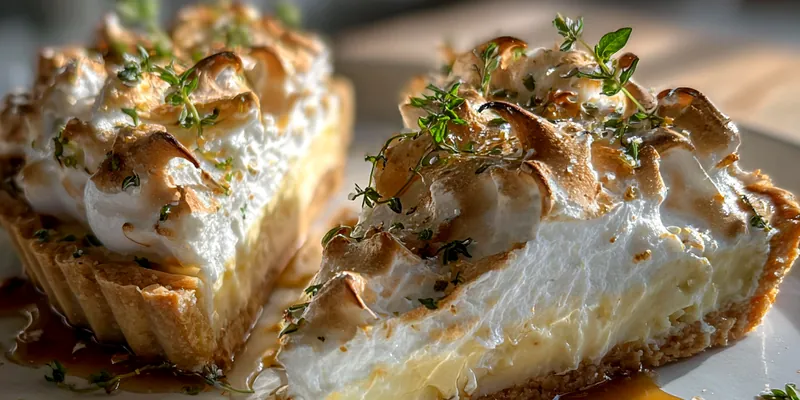
The technique behind Lemon Meringue Pie is all about balance. The tartness of the lemon filling is perfectly complemented by the airy sweetness of the meringue. When preparing the filling, proper temperature control is crucial to ensure the egg yolks cook without curdling. The science of creating a stable meringue lies in the technique of beating the egg whites to the right peak, which keeps the meringue fluffy and prevents it from weeping.
What makes this pie special is its layered texture and flavor profile. The tart lemon filling contrasts beautifully with the sweet, crisp meringue. Additionally, the bright yellow color of the lemon filling adds visual appeal to the dessert. This pie is often associated with sunny days and cheerful gatherings, making it a popular choice for celebrations and holidays.
💡 Professional Tip
For the best results, use fresh lemons rather than bottled juice, as fresh juice provides a stronger flavor and better acidity. Additionally, ensure your mixing bowl and beaters are clean and free from any grease when whipping the meringue. This will help achieve the best volume and texture for your meringue. Lastly, let your pie cool completely before slicing to ensure clean cuts and preserve the filling's texture.
Frequently Asked Questions
Yes, you can prepare the lemon filling and meringue separately ahead of time. Store the lemon filling in the refrigerator for up to 2 days in an airtight container. When ready to serve, simply assemble the pie with the meringue and bake it. However, it's best to bake the pie on the day you plan to serve it to maintain the meringue's texture.
If you're looking for alternatives, you can replace some of the lemon juice with lime juice for a different citrus flavor. For a gluten-free option, use a gluten-free pie crust. You can also use powdered sugar instead of granulated sugar for the meringue to achieve a finer texture. Additionally, consider using a store-bought lemon curd for a quicker filling option.
The pie is done when the meringue is golden brown and firm to the touch. You can gently tap the meringue with your finger; it should feel set and not soft. Additionally, the lemon filling should be bubbling slightly at the edges. Keep an eye on the pie while baking to avoid over-browning the meringue.
Lemon Meringue Pie is best enjoyed fresh, but you can freeze it without the meringue. Assemble the pie with the lemon filling and freeze it for up to 3 months. When ready to serve, thaw in the refrigerator overnight and add the meringue before baking. Be aware that freezing may affect the texture of the filling.
Lemon Meringue Pie pairs well with a dollop of whipped cream or a scoop of vanilla ice cream for added richness. Fresh berries such as strawberries or blueberries also complement the pie's citrus flavor beautifully. For a refreshing drink, serve with iced tea or lemonade to enhance the overall experience.
Lemon Meringue Pie can be stored in the refrigerator for up to 2 days. Ensure it is covered with plastic wrap to prevent the meringue from becoming sticky. For best quality, consume it within this timeframe, as the meringue may lose its texture over time.
Lemon Meringue Pie is not typically spicy, but you can adjust the tartness by varying the amount of lemon juice. If you prefer a sweeter filling, reduce the lemon juice slightly and increase the sugar. Experiment with different citrus fruits, like lime or orange, for a unique twist.
If you need to reheat Lemon Meringue Pie, it's best to do so in the oven at a low temperature. Preheat the oven to 300°F (150°C) and place the pie inside for about 10-15 minutes, just until warmed through. Avoid using the microwave, as it may cause the meringue to become chewy.
Recipe Troubleshooting Guide
Too Dry
Problem: If your lemon filling is too dry, it may be due to overcooking it during the thickening process.
Solution: To fix this issue, make sure to cook the filling just until it thickens and is bubbling. If it's already too dry, you can add a splash of water or lemon juice when you warm it back up.
Not Crispy
Problem: Meringue that isn't crispy may be due to insufficient baking time or humidity.
Solution: Ensure your meringue is baked until golden all over. If humidity is high, consider using a dehydrator to dry out the meringue further after baking.
Overcooked
Problem: An overcooked meringue can become dry and brittle.
Prevention: To avoid this, monitor the pie closely in the oven and remove it as soon as it turns golden. If it happens, you can serve it with whipped cream to add moisture.
Undercooked
Problem: An undercooked meringue will be soft and may collapse.
Recovery: Ensure that the meringue reaches stiff peaks and is baked until golden. If your meringue seems undercooked, return it to the oven for a few more minutes.
Burnt
Problem: A burnt meringue can result from too high of an oven temperature or prolonged baking.
Prevention: If this happens, cover the pie with foil to prevent further burning and lower the oven temperature next time. It’s also helpful to rotate the pie halfway through baking for even cooking.
Flavor Balance
Too Sweet: If the pie is too sweet, consider reducing the sugar in the filling or pairing it with tangy fruits.
Too Salty: A hint of salt can enhance flavors, but too much may overpower the lemon's brightness; adjust accordingly next time.
Bland: If the filling tastes bland, increasing the lemon juice and zest will brighten up the flavor significantly.

Key Ingredients
The star of Lemon Meringue Pie is undoubtedly the lemon, which provides the bright, tangy flavor that balances the sweetness of the meringue. Freshly squeezed lemon juice and zest are essential for achieving the best flavor profile. The sugar is crucial for both the filling and meringue, providing sweetness and stability. Cornstarch helps thicken the lemon filling, giving it the right consistency for a perfect pie.
Eggs are another key ingredient; both the yolks and whites play roles in creating the filling and meringue. The yolks add richness and creaminess to the filling, while the whites are whipped to create a light, airy meringue. Butter adds a luxurious finish to the filling, enhancing its smooth texture. These ingredients combined create a dessert that is both visually appealing and deliciously satisfying.
Essential Ingredient Notes
- Main Ingredient: Fresh lemons are essential for a vibrant flavor. Look for lemons that are firm and heavy for their size, indicating juiciness. Avoid those with blemishes or soft spots, as they may not be as fresh. Always wash your lemons before using them to remove any wax or pesticides.
- Second Key Ingredient: Egg whites should be at room temperature for the best volume. Ensure there are no traces of yolk in the whites, as this can prevent them from whipping properly. Using a clean, grease-free bowl will also help achieve the best meringue consistency. Fresh eggs yield better results than older eggs.
- Essential Seasoning: A pinch of salt enhances the flavors in both the filling and meringue. It balances the sweetness of the sugar and highlights the tartness of the lemon. Use fine sea salt or kosher salt for even distribution. Don’t skip this step, as it makes a significant difference in flavor.
Cooking Process
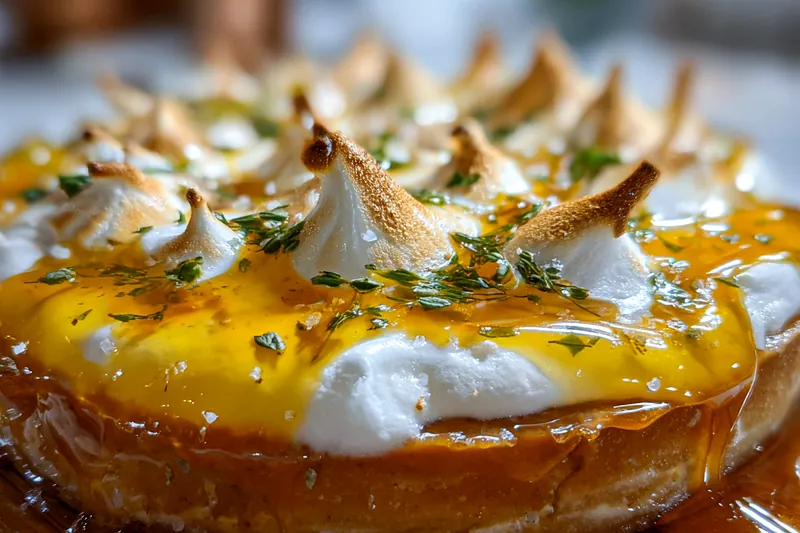
The cooking process of Lemon Meringue Pie requires careful attention to detail, especially when preparing the lemon filling. Start by creating a smooth, thick filling that requires constant stirring over medium heat. Once the filling is made, it should be poured into the prepared pie crust while still warm. This allows the flavors to meld and helps set the filling as it cools.
After the filling is set, whip the egg whites to form a stable meringue that is spread on top of the filling. The meringue needs to cover the filling completely to prevent it from weeping. Finally, baking the pie allows the meringue to develop a beautiful golden color while ensuring it is cooked through, resulting in a delightful dessert that will impress everyone.
Key Technique
The key technique in making a successful Lemon Meringue Pie lies in achieving the perfect meringue. Beating egg whites to stiff peaks is vital for creating a light and airy texture. Additionally, ensuring that the meringue is applied properly helps prevent shrinkage. Lastly, baking the pie at the right temperature and for the correct duration will yield a beautifully golden meringue that enhances the pie’s overall appeal.
Lemon Meringue Pie
📋 Ingredients
Main Ingredients
- 2 tablespoons cornstarchfor thickening
- 1/4 teaspoon saltto enhance flavor
Sauce/Seasoning
- 1 pre-made pie crustfor the base
- 1 cup granulated sugarfor sweetness
- 1 1/2 cups waterfor the filling
- 3 large egg yolksfor richness
- 1/2 cup freshly squeezed lemon juicefor tartness
- 1 tablespoon lemon zestfor enhanced flavor
- 2 tablespoons unsalted butterfor creaminess
Instructions
Prepare the Pie Crust
Preheat your oven to 350°F (175°C). Place the pre-made pie crust into a pie dish and bake it for 10-12 minutes or until lightly golden. Remove it from the oven and let it cool while you prepare the filling.
Make the Lemon Filling
In a medium saucepan, whisk together 1 cup of sugar, cornstarch, and salt. Gradually add in the water while stirring continuously, then bring the mixture to a boil over medium heat until it thickens.
Add Egg Yolks
Once thickened, reduce the heat and take a small amount of the hot mixture. Slowly whisk it into the beaten egg yolks to temper them, then return this mixture back to the saucepan. Stir in the lemon juice, lemon zest, and butter until fully combined.
Fill the Pie Crust
Pour the lemon filling into the pre-baked pie crust, smoothing it out with a spatula. Set it aside to cool while you prepare the meringue.
Make the Meringue
In a clean mixing bowl, beat the egg whites with cream of tartar until soft peaks form. Gradually add in 1/2 cup of sugar, continuing to beat until stiff peaks form and the mixture is glossy.
Top the Pie with Meringue
Spread the meringue over the lemon filling, making sure to seal the edges to prevent shrinkage during baking. Use a spatula to create decorative peaks on the surface.
Bake the Pie
Bake the pie in the preheated oven for 10-15 minutes or until the meringue is golden brown. Keep an eye on it to prevent burning.
Cool and Serve
Remove the pie from the oven and allow it to cool completely on a wire rack. Once cooled, refrigerate for at least 2 hours before slicing and serving.
Recipe Notes & Tips
Storage Tips
Store leftover Lemon Meringue Pie in the refrigerator, covered with plastic wrap to keep the meringue from becoming sticky. It can be kept for up to 2 days, but for best results, enjoy it fresh. If you notice the meringue starting to weep, it's a sign that it may not last much longer.
Serving Ideas
Serve Lemon Meringue Pie chilled for the best flavor experience. Consider garnishing with fresh berries or mint for added color and flavor. Pair it with a scoop of vanilla ice cream or a dollop of whipped cream for extra indulgence.
Variations
For a twist on the classic, try using lime juice instead of lemon for a key lime pie variation. You can also experiment with different citrus fruits, like orange or grapefruit, for unique flavor profiles. Adding a hint of ginger or coconut to the filling can also create exciting new variations.