Hummus with Warm Bread
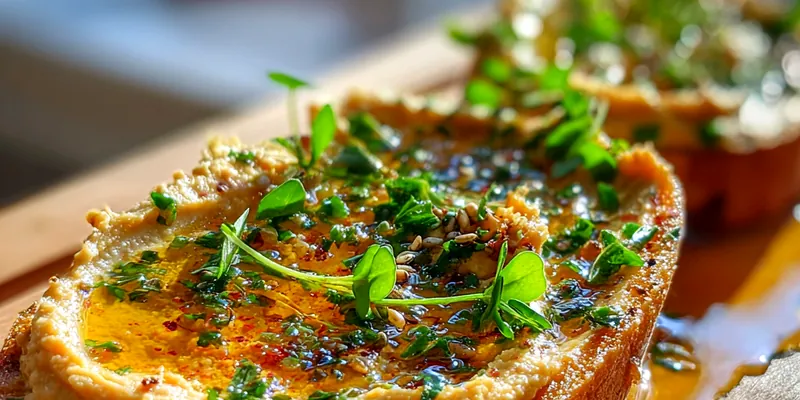
Hummus with Warm Bread is a delightful dish that brings together creamy, flavorful hummus and soft, warm bread. Originating from the Middle East, this dish has become a favorite worldwide for its simplicity and delicious taste. This recipe allows you to create homemade hummus that is not only healthy but also easy to make, making it a perfect appetizer or main course. Whether you are hosting a gathering or enjoying a quiet night in, this dish is sure to impress. Its blend of textures and flavors creates a satisfying experience that keeps everyone coming back for more.

Why This Hummus with Warm Bread Works
The beauty of Hummus with Warm Bread lies in its simplicity and the balance of flavors. The creamy texture of hummus contrasts beautifully with the warm, fluffy bread, creating a satisfying bite. The use of chickpeas provides a hearty base rich in protein, making this dish not only delicious but also nutritious. Each ingredient plays a vital role in enhancing the overall taste, from the nuttiness of tahini to the brightness of lemon juice.
What sets this recipe apart is its versatility. You can customize the hummus with various spices or toppings, making it suitable for any palate. Additionally, the warm bread acts as a perfect vehicle for the hummus, ensuring that every scoop is flavorful. This dish is ideal for gatherings, as it encourages sharing and allows guests to engage in the experience of dipping and savoring together.
💡 Professional Tip
For an ultra-smooth hummus, peel the chickpeas before blending. This small step can make a significant difference in texture. Also, experiment with different oils, like avocado oil, for a unique flavor twist. Lastly, serve the hummus with a variety of toppings, such as roasted red peppers or olives, to elevate the presentation and taste.
Frequently Asked Questions
Yes, you can prepare the hummus a day in advance. Store it in an airtight container in the refrigerator to keep it fresh. Just give it a good stir before serving and adjust the consistency with a little water or olive oil if needed. However, it's best to warm the bread just before serving to enjoy its full flavor and texture.
For a nut-free version, you can substitute tahini with sunflower seed butter. If you're looking for a lower-calorie alternative, Greek yogurt can replace some of the tahini. For the bread, whole grain or gluten-free options work well too. You can also experiment with different spices, such as smoked paprika or harissa, to give your hummus a unique twist.
The hummus is done when it reaches a creamy and smooth consistency, and the flavors are well balanced. Taste it and adjust the seasoning as necessary. For the bread, it should be warm and slightly crispy but not overly hard. The ideal result is a bread that can easily scoop up the hummus without breaking.
Yes, you can freeze hummus for up to three months. Make sure to store it in an airtight container and leave some space for expansion. When ready to use, thaw it in the refrigerator overnight and stir well before serving. However, the pita bread is best enjoyed fresh and should not be frozen.
Hummus pairs well with a variety of fresh vegetables like cucumber, carrots, and bell peppers for dipping. You can also serve it alongside olives, feta cheese, or grilled meats for a more robust meal. A simple salad or tabbouleh also complements the flavors beautifully. Don’t forget to include lemon wedges for an extra zing!
Hummus can be stored in the refrigerator for about 5-7 days. Make sure to keep it in an airtight container to maintain its freshness. If you notice any discoloration or off smell, it's best to discard it. Pita bread is best enjoyed fresh but can be stored in a bread bag for a day or two at room temperature.
To adjust the spice level, consider adding more garlic or a pinch of cayenne pepper if you enjoy a bit of heat. For a milder flavor, reduce the garlic amount or omit it entirely. You can also serve spicy condiments on the side for guests to add according to their preference. Experiment with flavors until you find the perfect balance for your taste.
The best way to reheat pita bread is to wrap it in aluminum foil and place it in a preheated oven at 350°F (175°C) for about 10 minutes. This method keeps the bread soft and warm without becoming overly crispy. Avoid microwaving, as it can make the bread chewy. Serve the hummus at room temperature or slightly warmed for the best experience.
Recipe Troubleshooting Guide
Too Dry
Problem: If your hummus is too dry, it may be lacking moisture or oil.
Solution: Add a tablespoon of water or olive oil and blend again until smooth. You can also incorporate a bit more lemon juice for added flavor while improving the texture.
Not Crispy
Problem: If your pita bread isn't crispy, it may not have been baked long enough.
Solution: Ensure the bread is warmed at a high enough temperature and for a sufficient amount of time. You can also try brushing the bread lightly with olive oil before warming for added crispiness.
Overcooked
Problem: If your pita bread is overcooked, it may become too hard and dry.
Prevention: Keep an eye on the bread while it’s warming in the oven. If it starts to smell burnt, remove it immediately to prevent it from becoming too tough to enjoy.
Undercooked
Problem: Undercooked pita may feel doughy or soft.
Recovery: Return the bread to the oven for a few more minutes until it is warm and has a slight crunch. Just be cautious not to overbake.
Burnt
Problem: If the hummus or bread is burnt, the flavors can be overly intense and unpleasant.
Prevention: For the hummus, discard any burnt portions and blend the rest. For burnt bread, simply make a fresh batch and keep an eye on the oven to avoid this issue in the future.
Flavor Balance
Too Sweet: If the hummus tastes too sweet, it may have an excess of lemon juice or tahini.
Too Salty: For too salty hummus, add a small amount of water or more chickpeas to dilute the saltiness.
Bland: If the flavor is bland, try adding more salt, cumin, or garlic to enhance the taste.

Key Ingredients
The main ingredient in hummus is chickpeas, which provide a rich source of protein and fiber. They are blended with tahini, a paste made from ground sesame seeds, that adds creaminess and a unique nutty flavor. Lemon juice brings a refreshing acidity that balances the richness of the other ingredients. Garlic adds depth and complexity to the flavor profile, making the hummus more vibrant.
In addition to the chickpeas and tahini, the seasoning is essential to elevate your hummus. Ground cumin is a popular choice, imparting an earthy warmth that complements the other ingredients. Olive oil not only contributes to the flavor but also helps in achieving a smooth texture. Za'atar seasoning, a blend of herbs, adds a delightful finishing touch when sprinkled on top before serving.
Essential Ingredient Notes
- Main Ingredient: Chickpeas are the star of this dish, providing not just flavor but also significant health benefits. They are high in protein, making hummus a satisfying option for vegetarians. Opt for dried chickpeas soaked overnight or canned chickpeas for a quicker preparation. Always rinse canned chickpeas to remove excess sodium.
- Second Key Ingredient: Tahini is essential for achieving the creamy texture that hummus is known for. Made from toasted ground sesame seeds, it adds a rich, nutty flavor. Look for high-quality tahini that is smooth and well-mixed. If you're making your own, ensure the seeds are toasted just right for the best flavor.
- Essential Seasoning: Olive oil not only adds flavor but also helps emulsify the ingredients, resulting in a smoother hummus. Extra virgin olive oil is best for its robust taste and health benefits. Use it generously in the blending process and as a drizzle on top before serving for a beautiful presentation.
Cooking Process
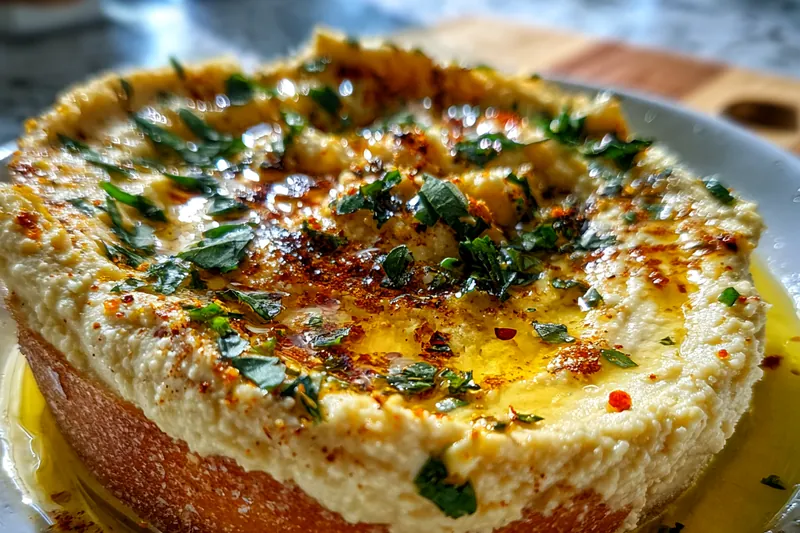
To start the cooking process, gather all your ingredients and equipment, including a food processor and baking sheet. Rinse and drain the chickpeas, and prepare your garlic and lemon juice. Blend the chickpeas with the tahini, olive oil, garlic, and spices until smooth. Remember to scrape down the sides of the bowl to ensure even mixing.
Once the hummus is blended to your desired consistency, prepare the pita bread by preheating the oven. Warm the bread until slightly crispy on the outside but still soft inside, ensuring it’s perfect for dipping. Finally, serve the hummus in a bowl, garnished with olive oil and za'atar, alongside the warm bread for an inviting presentation.
Key Technique
Achieving the perfect hummus is all about blending techniques. Start with room temperature ingredients for the best emulsion. Allowing the chickpeas to blend longer can result in an ultra-smooth texture. Always adjust the consistency with water or olive oil gradually until you reach your desired smoothness. Lastly, don't forget to taste and adjust the seasoning before serving to ensure a balanced flavor.
Hummus with Warm Bread
📋 Ingredients
Main Ingredients
- 1/4 cup tahiniAdds creaminess and a nutty flavor
- 1 tablespoon za'atar seasoningHerb blend for topping
- Salt to tasteEnhances flavors
Sauce/Seasoning
- 1 can (15 oz) chickpeas, drained and rinsedBase ingredient rich in protein
- 2 tablespoons olive oilFor blending and drizzling
- 1 lemon, juicedAdds brightness and acidity
- 2 cloves garlic, mincedEnhances the flavor
- 1/2 teaspoon ground cuminAdds warmth
- Water as needed for consistencyTo adjust texture
Instructions
Prepare the Hummus
In a food processor, combine the chickpeas, tahini, olive oil, lemon juice, garlic, cumin, and salt. Blend until smooth, adding water gradually to reach your desired consistency. Taste and adjust the seasoning as needed.
Heat the Pita Bread
Preheat your oven to 350°F (175°C). Place the pita bread directly on the oven rack or on a baking sheet. Bake for about 5-10 minutes, or until warm and slightly crispy.
Serve the Hummus
Transfer the hummus to a serving bowl. Drizzle with olive oil and sprinkle za'atar seasoning on top for added flavor. Garnish with fresh parsley for a pop of color.
Enjoy with Warm Bread
Serve the warm pita bread alongside the hummus. Break pieces of bread to scoop the hummus, creating a delicious and interactive dining experience. Perfect for sharing with friends and family.
Recipe Notes & Tips
Storage Tips
Store leftover hummus in an airtight container in the refrigerator for up to a week. To maintain freshness, consider covering the surface with olive oil before sealing. Pita bread is best consumed fresh, but you can store it in a bread bag at room temperature for a day or two. If it becomes hard, you can revive it slightly in the oven.
Serving Ideas
For an elevated experience, consider serving your hummus with a platter of fresh veggies like carrots, cucumber, and bell peppers. You can also add olives, feta, or roasted vegetables for variety. A refreshing salad on the side can complement the dish beautifully. Don't forget to provide extra pita for dipping!
Variations
Feel free to customize your hummus by adding roasted red peppers, sun-dried tomatoes, or herbs like basil and cilantro. For a spicy kick, mix in some harissa or chili flakes. You can also try different breads, such as naan or lavash, to pair with the hummus. Each variation brings a unique twist to this classic dish.